2026 Best Kinetic Lighting System for Global Buyers?

Time:2026-10-09 Author:Sophia
0%

The 2026 search for the best Kinetic Lighting System is no longer about movement alone. Global buyers now expect precise motion, quiet operation, efficient LEDs, and dependable control software. A ceiling installation should move smoothly, not jerk like a poorly tuned machine. It should also survive repeated daily cycles, transport, humidity, and complex venue schedules.

Industry evidence supports this wider evaluation. The U.S. Department of Energy’s 2023 Solid-State Lighting R&D Opportunities report highlights efficiency, controllability, interoperability, and long service life as continuing priorities. The International Energy Agency’s Energy Efficiency 2024 analysis also reinforces the importance of efficient lighting and smarter controls across commercial buildings. These findings matter for airports, hotels, museums, retail spaces, and performance venues. Energy savings are useful. Predictable maintenance is better.

Lighting designer Rogier van der Heide, formerly Philips Lighting’s Chief Design Officer, stated, “Light is not something you see, it is something you feel.” His observation remains relevant when evaluating kinetic systems. Movement must support atmosphere, wayfinding, and human comfort, rather than create visual noise. Buyers should compare payload capacity, motor noise, DMX or Art-Net compatibility, emergency behavior, warranty terms, spare-part access, and installer training. Independent testing and documented safety compliance deserve equal attention.

There is no universal winner. Real projects are messier. A premium system may fail when local technicians cannot service it quickly. This guide therefore examines leading 2026 options through performance data, installation experience, operating costs, and supplier credibility. The strongest Kinetic Lighting System is not always the most dramatic one. It is the system that keeps performing after the opening night.
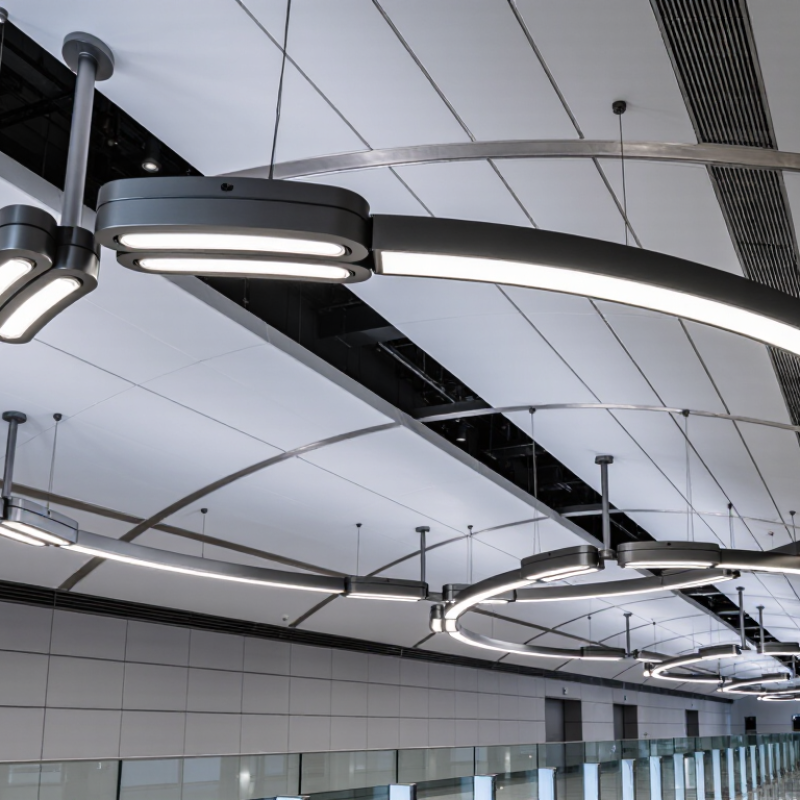
2026 Best Kinetic Lighting System for Global Buyers?

What Is a Kinetic Lighting System and How Does It Work?

A kinetic lighting system combines programmable lights, motors, control software, and a supporting structure. Unlike fixed fixtures, its lights can move during a performance or installation. They may rise, lower, tilt, rotate, or form changing patterns above an audience.

Each fixture connects to a motorized hoist or moving arm. A lighting console sends position, speed, color, and brightness instructions through a control network. Encoders report the fixture’s real location, helping the system correct movement errors. Carefully configured limits prevent equipment from traveling beyond its approved range. It is not magic. It is coordinated engineering.

From hands-on installation experience, accurate measurements matter as much as creative programming. Technicians check ceiling loads, cable paths, emergency stops, motor ratings, and maintenance access before operation. A small calibration error can make several lights appear uneven. That matters. Operators also program slower movements near people and test every cue at reduced speed. Safety procedures should follow local building, electrical, and occupational requirements, with qualified professionals reviewing the installation.

The visual effect can resemble floating stars, a moving ceiling, or a wave of light across a stage. However, the system needs regular inspections, software backups, and documented load calculations. Dust, heat, vibration, and frequent movement gradually affect performance. A practical design leaves room for repair, although designers sometimes prioritize appearance too heavily. That is a weakness worth questioning. For global buyers in 2026, comparing control compatibility, technical support, spare parts, and compliance documentation is more useful than judging brightness alone.

Which Kinetic Lighting Technologies Will Lead the 2026 Market?

In 2026, kinetic lighting technologies will compete on control, efficiency, and movement quality.
Motorized LED fixtures are likely to lead because they combine low energy use with programmable motion. The International Energy Agency reports that LEDs now represent more than half of global lighting sales. That shift creates a stronger foundation for dynamic systems. Wireless DMX, Art-Net, and cloud-based monitoring will also expand. They reduce cable demand and help technicians manage hundreds of fixtures from one interface. However, wireless control can still suffer in crowded venues. This weakness is often overlooked.

Sensor-driven lighting should become more valuable for exhibitions, hospitality spaces, and public installations. Occupancy sensors, LiDAR, and real-time software can adjust brightness and movement within seconds. MarketsandMarkets estimates the smart lighting market could reach more than 40 billion US dollars before 2030, depending on regional definitions. That forecast suggests strong investment, but it does not guarantee equal demand for kinetic products. Buyers should question inflated growth claims. Hardware maintenance remains expensive.

Tips: Test one full-scale scene before ordering. Check motor noise, heat, emergency operation, and software compatibility. Request measured power data, not only efficiency percentages. Also review replacement access. A beautiful fixture becomes a poor investment when a small motor requires a full ceiling shutdown. Energy Star research shows connected controls can reduce lighting energy use significantly, but actual savings depend on programming and user behavior. Technology leads the market only when crews can operate it reliably.

How to Compare Performance, Design, Safety, and Control Features

For global buyers, a kinetic lighting system should be judged by measurable performance, not dramatic movement alone. The IEA’s Energy Efficiency 2023 report estimates that lighting consumes about 15% of global electricity. Efficient fixtures, accurate dimming, and scheduled operation can therefore reduce operating waste. Ask for photometric files, measured lux, color consistency, flicker data, noise levels, and motor duty cycles. Test a sample for several hours, not just five minutes.

Design affects both atmosphere and maintenance. A compact moving unit may look elegant above a stage, but exposed cables, visible brackets, or loud motors can weaken the installation. Control compatibility also matters. Confirm support for DMX512, Art-Net, sACN, or DALI-2 before purchase. The U.S. Department of Energy’s solid-state lighting research reports consistently identify controllability, efficacy, and lifetime as key performance priorities. A beautiful effect with poor interoperability becomes expensive quickly.

Safety needs a physical inspection. Check load ratings, suspension points, emergency-stop behavior, cable strain relief, heat management, and pinch-point protection. IEC 60598-1 provides a useful framework for luminaire safety, while IEC 62471 helps assess optical exposure. IP ratings should match dust and moisture conditions, rather than marketing expectations. No scorecard is perfect. I would also request service records, spare-part availability, and a documented risk assessment. Buyers sometimes overlook these details, then discover that a silent motor is less valuable than reliable access for maintenance.

2026 Best Kinetic Lighting System for Global Buyers? - How to Compare Performance, Design, Safety, and Control Features
System Category Typical Installation Fixture Type Typical Payload per Motor Vertical Travel Movement Speed Positioning Accuracy Light Source Color Performance Control Protocols Safety Features Ingress Protection Power and Data Maintenance Profile Overall Score
Compact Creative System Retail displays, galleries, studios, small venues Lightweight LED pendants or pixel tubes 5–15 kg 3–6 m 0.1–0.5 m/s ±10 mm LED, RGBW or tunable white Up to 95 CRI; 2,700–6,500 K DMX512, Art-Net, sACN Upper and lower travel limits, emergency stop, overload monitoring Usually IP20 for indoor use Low-voltage fixture wiring with separate motor supply Low; accessible components and short travel paths 7.5
Architectural Linear System Hotels, museums, atriums, permanent installations Linear LED bars, profiles or compact pendants 10–30 kg 5–12 m 0.05–0.4 m/s ±5 mm White, RGBW or pixel-addressable LED Typically 90–98 CRI; 2,700–6,500 K DMX512, RDM, Art-Net, sACN, timecode Dual limit sensing, brake monitoring, load detection, obstruction detection IP20–IP54 depending on fixture enclosure AC mains with DMX, Ethernet or hybrid data distribution Medium; scheduled inspection is recommended 8.4
High-Load Performance System Theatres, concert halls, broadcast studios, touring stages Moving LED fixtures, scenic luminaires or clustered fixtures 25–75 kg 6–18 m 0.05–0.8 m/s ±3 mm High-output LED, RGBW or variable-white LED Typically 90–97 CRI; calibrated color mixing DMX512, RDM, Art-Net, sACN, OSC, timecode Redundant brakes, overspeed protection, encoder feedback, emergency stop, safe-load limits IP20 for indoor venues; outdoor rating requires protected fixtures Dedicated motor circuits with Ethernet or DMX network backbone Medium to high; requires trained technicians and documented inspections 9.0
Outdoor Event System Festivals, temporary outdoor events, public installations Weather-resistant LED fixtures, pixel bars or scenic elements 10–50 kg 4–15 m 0.05–0.6 m/s ±5–10 mm RGBW, pixel LED or high-output white LED Typically 80–95 CRI; wide color gamut options DMX512, RDM, Art-Net, sACN, wireless DMX options Weather monitoring, emergency stop, limit switches, overload protection, mechanical secondary retention IP65 or higher for suitably rated outdoor fixtures Weatherproof power and data distribution; connector protection required High; weather, corrosion and rigging conditions affect service intervals 8.2
Immersive Pixel-Addressable System Experiential venues, media art, exhibitions, themed environments Pixel tubes, LED spheres, modular light nodes or flexible arrays 5–40 kg 3–20 m 0.02–0.5 m/s ±3–8 mm Individually addressable RGB, RGBW or tunable-white LED Typically 80–95 CRI; pixel-level calibration varies by system Art-Net, sACN, DMX512, OSC, SMPTE timecode, media-server integration Position feedback, travel limits, load monitoring, emergency stop and programmed safe positions IP20–IP65 depending on module and installation environment Distributed power injection with Ethernet-based control and managed network switches Medium to high; pixel modules and data connections need systematic testing 8.8
Large-Scale Scenic System Arena productions, flagship architecture, major public spaces Large kinetic arrays, suspended scenic structures or multi-fixture clusters 50–150 kg 8–30 m 0.02–0.5 m/s ±2–5 mm High-output LED arrays with custom optical systems Typically 85–95 CRI; project-specific calibration DMX512, RDM, Art-Net, sACN, OSC, timecode and show-control interfaces Redundant lifting components, independent brakes, encoder feedback, overspeed and overload protection, safety PLC, emergency stop Usually IP20 indoors; environmental protection must be engineered for outdoor use Engineered power distribution, redundant network paths and documented load calculations High; requires professional rigging, commissioning and preventive maintenance 9.3
Comparison notes: The figures show typical specification ranges for anonymous kinetic lighting system categories and are intended for early-stage global procurement comparison. Actual capacity, travel, speed, accuracy, ingress protection and safety performance depend on the motor, fixture weight, suspension geometry, control cabinet, installation height, local regulations and commissioning method. Verify structural calculations, emergency procedures, electrical compliance, inspection requirements and operator training before purchase or installation.

What Should Global Buyers Know About Installation and Compliance?

For global buyers, installing a kinetic lighting system starts with the building, not the fixture. Confirm ceiling load capacity, fixing points, cable routes, and maintenance access before placing an order. Moving lights create repeated forces, especially during acceleration and stopping. A structural engineer should review the support design and anchoring method.

Electrical compliance varies by destination. Ask for current test reports, wiring diagrams, risk assessments, and clear operating instructions. Check voltage, frequency, grounding, electromagnetic compatibility, and emergency-stop requirements with a qualified local electrician. Fire-rated materials may be required above public areas. In some markets, certification marks alone are not enough.

Plan for inspection.

Installation should follow the approved drawings, with every motor, cable, and attachment recorded. Keep safe clearance from sprinklers, ventilation equipment, and audience pathways. A commissioning test should examine noise, movement limits, overheating, and failure behavior. Do not assume one certificate covers every country; local authorities may request additional evidence. Customs documents can also expose small inconsistencies.

Real projects are rarely perfect. A beautiful ceiling plan may ignore replacement access. That mistake becomes expensive. Buyers should request a spare-parts schedule, training records, warranty conditions, and a response plan for outages. I would also test the system under realistic conditions, including dust, frequent cycles, and partial power loss, because laboratory confidence does not always match venue reality.

The chart uses the second digit of the IEC 60529 IP code, which identifies protection against water. IPX4 covers splashing water, IPX5 water jets, IPX6 powerful water jets, IPX7 temporary immersion, and IPX8 continuous or extended immersion under conditions agreed with the manufacturer. Global buyers should confirm the required IP rating with the installation environment, local electrical regulations, and the complete lighting-system specification.

How to Select the Best Kinetic Lighting System for Different Venues

2026 Best Kinetic Lighting System for Global Buyers?

Selecting a kinetic lighting system starts with the venue, not the fixture catalog. In a theater, quiet motors and precise movement protect dialogue and musical detail. A ballroom may need faster travel, brighter output, and flexible mounting for changing layouts. In a museum, low heat, gentle motion, and restrained brightness can protect sensitive displays. I have found that a beautiful demonstration can mislead when ceiling height, sightlines, and service access are ignored. Measure the rigging points carefully. Leave room for maintenance.

For touring venues, choose modular units with documented load ratings, cable paths, emergency-stop functions, and predictable control responses. Ask for test data on noise, movement cycles, power draw, and heat. A system should communicate reliably with the venue’s lighting console and backup controls. Check local electrical, fire, lifting, and worker-safety requirements before installation. Compliance is not paperwork alone; it shapes the design. An overloaded truss or blocked escape route can turn visual ambition into operational risk.

Match movement to the audience experience. Slow, suspended patterns suit galleries and corporate events, while dramatic vertical movement may fit concerts and immersive rooms. Still, more movement is not automatically better. Operators need clear presets, manual override, and training for real show conditions. Request a physical demonstration with the intended content, not only polished video. Record sound levels from audience seats. Review the first installation after several events. Some assumptions will fail, and that feedback should guide the next adjustment.

FAQS

What is a kinetic lighting system?

It combines programmable lights, motors, control software, and a supporting structure. The fixtures can rise, lower, tilt, rotate, or create changing patterns. It is coordinated engineering, not magic.

How does the system control moving lights?

A lighting console sends instructions for position, speed, color, and brightness. Motorized hoists or arms move each fixture. Encoders report actual positions and help correct movement errors.

What should be checked before installation?

Check ceiling loads, fixing points, cable paths, and maintenance access. A structural engineer should review the support and anchoring method. Small measurement errors can make several lights look uneven.

How are safety limits managed?

Software limits prevent fixtures from moving beyond approved areas. Emergency stops, motor ratings, cable attachments, and movement clearances need testing. Operators should use slower movements near people.

What compliance documents should buyers request?

Request test reports, wiring diagrams, risk assessments, and operating instructions. Also check grounding, voltage, frequency, and electromagnetic compatibility. One certificate may not satisfy every country.

How should the system be tested before public use?

Commissioning should test noise, movement limits, overheating, and failure behavior. Test cues at reduced speed before running the full performance. Include dust, frequent cycles, and partial power loss.

What maintenance does a kinetic lighting system require?

Regular inspections, software backups, and documented load calculations are essential. Dust, heat, vibration, and repeated movement gradually affect performance. Leave physical room for repairs.

What common installation weakness should buyers question?

Designers may prioritize a beautiful ceiling over practical replacement access. That decision can make one failed fixture expensive to reach. Appearance is not everything.

Conclusion

This guide explains what a Kinetic Lighting System is and how it combines programmable light fixtures, moving components, control software, and structural mechanisms to create dynamic visual experiences. It examines the technologies expected to shape the 2026 market, including efficient LED sources, automated motion systems, real-time control, sensor integration, and synchronized audio-visual programming. Global buyers will learn how to compare brightness, color quality, movement precision, durability, energy use, safety features, creative flexibility, and control compatibility before making a purchase.

The article also outlines essential considerations for installation and compliance, such as ceiling capacity, electrical requirements, maintenance access, emergency operation, operator training, documentation, and local certification requirements. Finally, it explains how to select the most suitable Kinetic Lighting System for venues such as theaters, concert halls, event spaces, retail environments, hospitality locations, and architectural installations. By matching system scale and functionality with venue needs, buyers can achieve reliable performance, efficient operation, safe installation, and compelling long-term value.

Sophia

Sophia

Sophia is a dedicated marketing professional with an exceptional depth of knowledge about her company's products and services. With a keen understanding of market trends and customer needs, she crafts insightful blog posts that not only inform but also engage readers, enriching the company’s online......