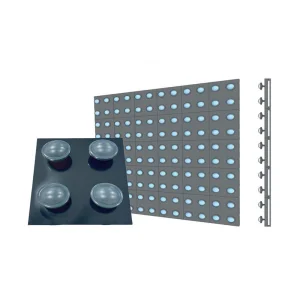
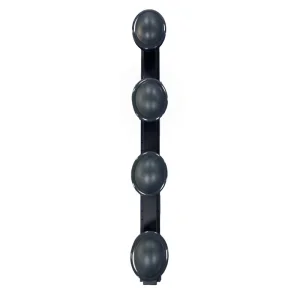
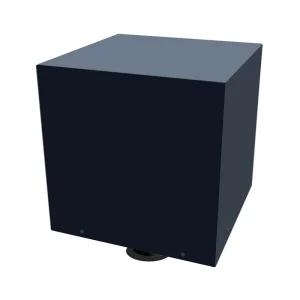
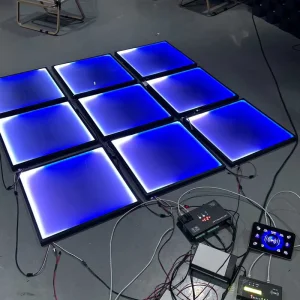
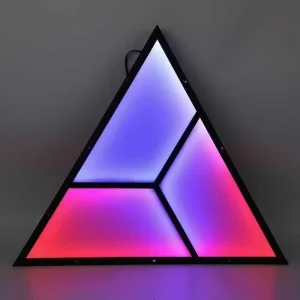
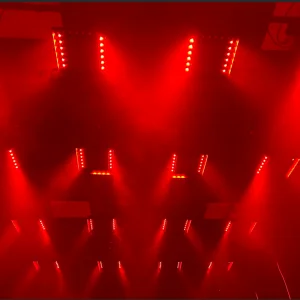
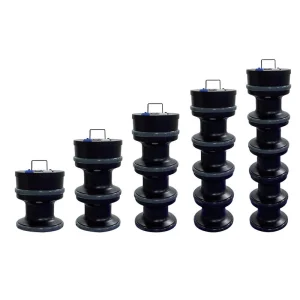
Explore our flagship 3D magic lighting systems engineered for clubs, performance stages, and interactive commercial displays.
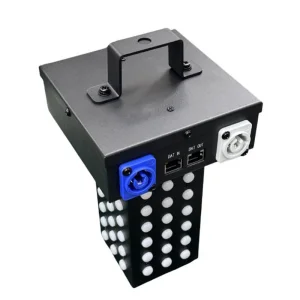
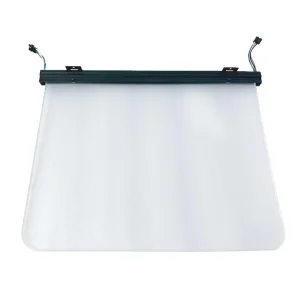
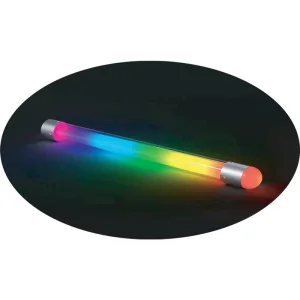
Modern spatial design has transitioned beyond two-dimensional screen projections to embrace volumetric, structural spatial lighting. 3D Magic Lights represent a significant evolutionary step in this transition, integrating high-density RGB/RGBW addressable pixel nodes, micro-stepping motorized kinetic winches, and advanced master control systems. By organizing point light sources along Cartesian (X, Y, Z) coordinate geometries, these systems convert open-air volumes into three-dimensional graphic displays.
From a physical perspective, 3D Magic Lights function by using human persistence of vision (POV) and precise temporal synchronization to generate shapes, volumetric text, and architectural movement within a 3D space. This requires specialized control hardware, consistent DMX/Art-Net latency control, and strict thermal management. Unlike generic LED strips, specialized 3D lights require constant-current driver ICs (such as the UCS1903, TM1914, or DMX512 AP chipsets) to prevent voltage drops over long structural runs. This layout maintains uniform color matching across thousands of independent spatial nodes.
Each pixel node is assigned a specific spatial coordinate. When driven by volumetric matrix software (such as Madrix or Resolume), the array behaves as a cohesive visual field, allowing complex three-dimensional objects to move through space.
Extended running times in dense venue ceiling grids create significant ambient heat. Xiaosan utilizes aircraft-grade, high-conductivity aluminum PCBs and ventilated extrusion housings to maximize passive dissipation and ensure component longevity.
For modern environments where video recording is common, our driver architectures operate at high Pulse Width Modulation (PWM) cycles. This avoids the on-camera banding and flickering common with low-grade stage lights.
The global entertainment lighting market is shifting from static, localized stage rigs toward integrated, system-wide architectural solutions. In regions like North America, Western Europe, and East Asia, night venues, concerts, and brand experiences are prioritizing multi-sensory immersion. High-performance, pixel-mappable 3D magic light setups have moved from luxury additions to core elements of stage and venue design.
Key drivers behind this global market growth include:
Implementing a successful 3D volumetric light array requires proper control signal paths. Standard DMX512 networks run at 250 Kbps, which quickly becomes a bottleneck when routing thousands of individual pixel nodes. A single spatial fixture with 100 RGB nodes requires 300 control channels, occupying more than half of a standard DMX universe. To manage this data load, professional installations use Art-Net or sACN protocols to stream data over fast Ethernet physical layers.
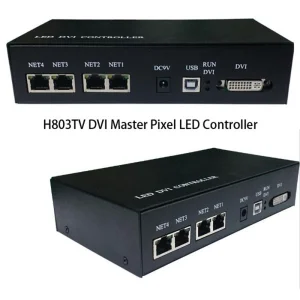
Xiaosan's control systems, including the H803TV Master Controller, decode HDMI/DVI inputs from media servers running Madrix, Resolume, or TouchDesigner. This signal is converted into high-speed SPI or standard DMX signals, driving synchronized updates across large-scale physical arrays. The diagram below represents a typical network layout:
| Control Protocol | Art-Net I, II, III, IV / sACN (E1.31) / DMX512-A |
| Physical Connection | Gigabit RJ45 Ethernet input, converting to multi-channel DMX or SPI outputs |
| Compatibility | Madrix, Resolume Arena, TouchDesigner, Sunlite, Lightjams |
| Node Driver Chips | UCS1903, TM1914, WS2812B, GS8208 (dual-signal redundant backups) |
| Voltage Options | DC12V, DC24V, AC110V-240V wide-range switching power systems |
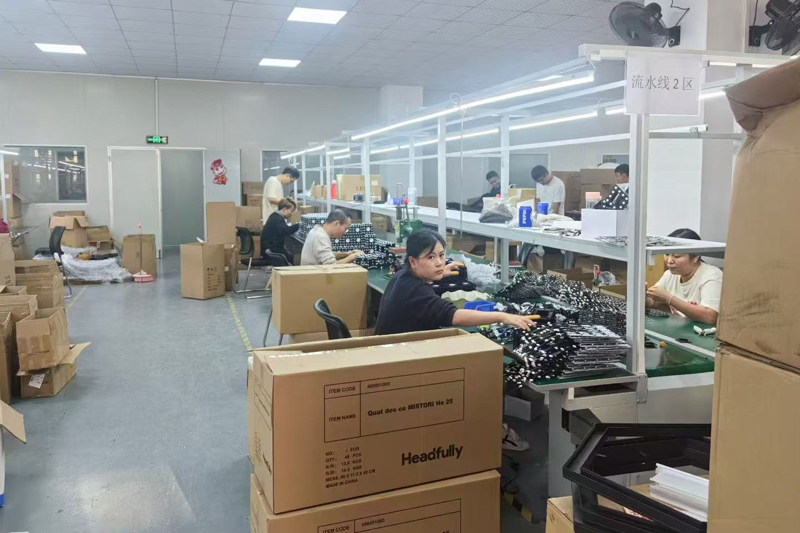
Founded in 2019 by Mrs. Ami Q and her husband Mr. Ahren Z, Xiaosan is located in Guangdong Province, China. The company operates as a specialized manufacturing and design hub for custom entertainment lighting fixtures. Over the years, we have grown from a local assembly shop into a structured 1,000-square-meter facility, housing advanced automated surface mount (SMT) production lines, CNC metal stamping stations, and dedicated aging test rooms.
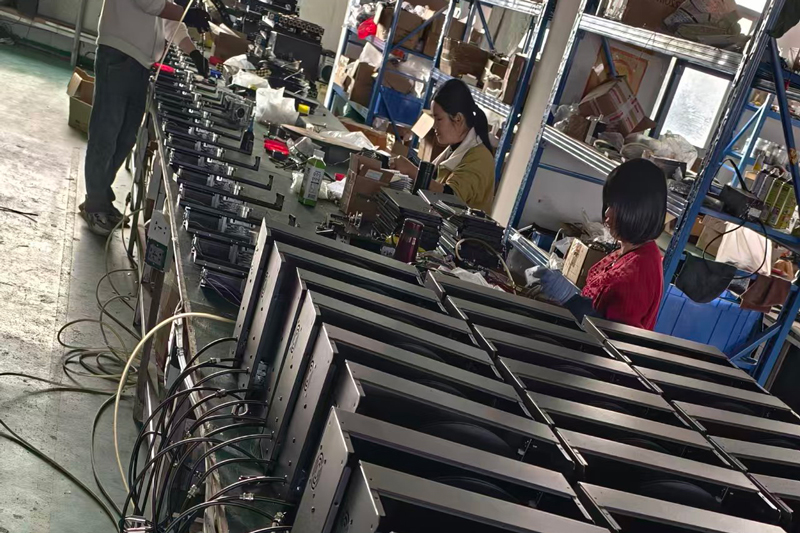
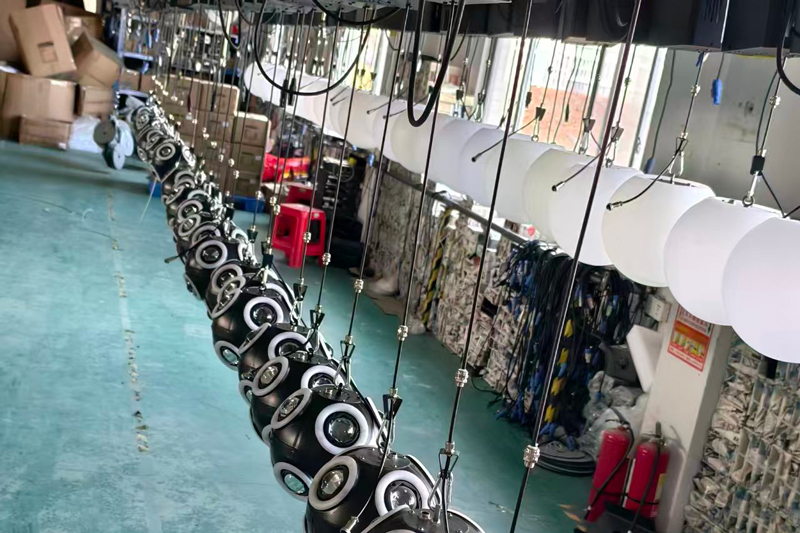
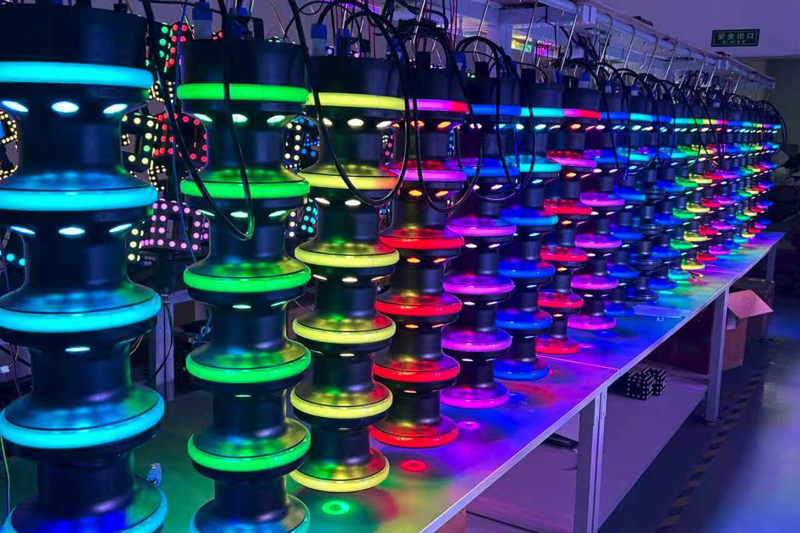
Our operation integrates product design, structural engineering, software setup, and final production. We develop comprehensive layouts for global clubs, live events, and commercial displays. All products undergo a mandatory 48-hour continuous burn-in and structural stress test. This ensures that every component—from single pixel tubes to complex motorized kinetic winches—maintains its performance long before arriving on site.
Below is a visual look at our production floor, assembly cells, and quality control departments. These facilities highlight the practical engineering behind every fixture we build.
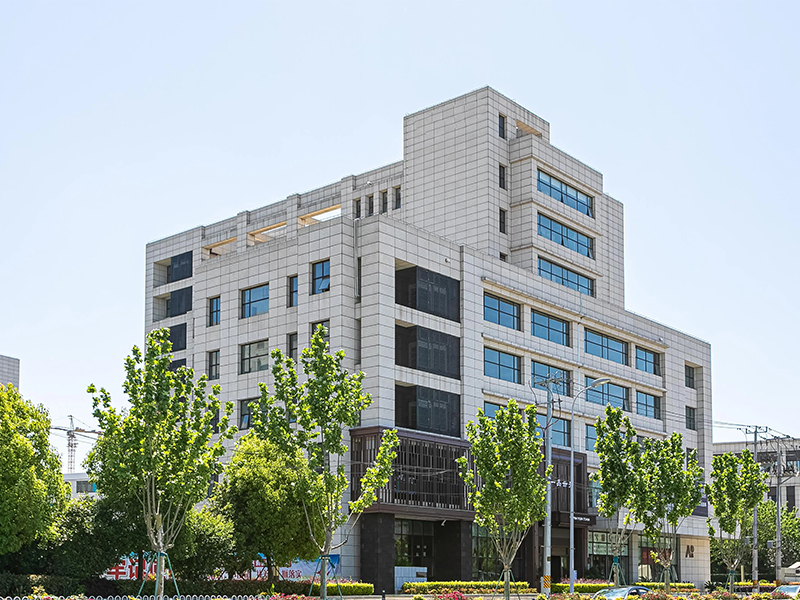
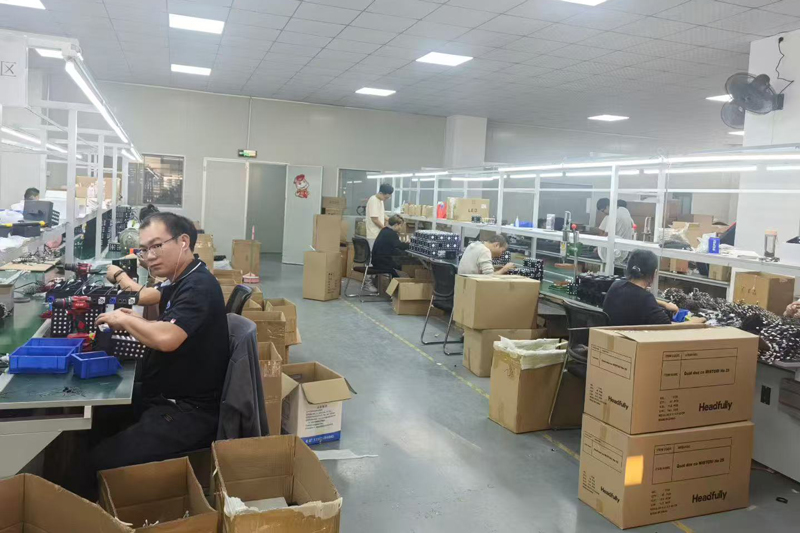
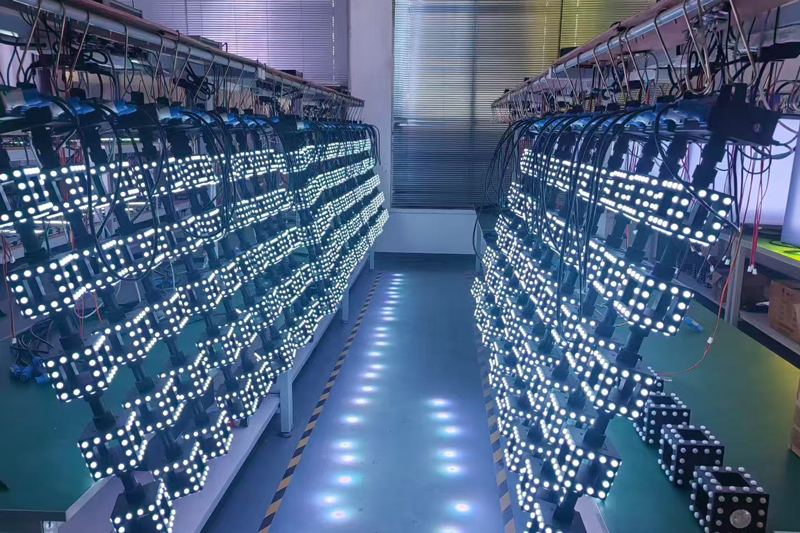
Because stage environments differ significantly based on location, safety requirements, and layout, we supply modular configurations designed for specific use cases:
Venues require fast, continuous light movements. Products like our OEM Pixel 'UFO' Bar Lights and 3D Matrix Bamboo Lights are designed to handle prolonged high-current operation, featuring rapid response times to sync with live audio beats.
For installations in public spaces or shopping centers, weather protection is critical. We build customized architectural fixtures with IP65 to IP68 ratings, incorporating robust UV-resistant clear covers and silicone sealing to handle outdoor environments.
Museums and corporate events benefit from responsive lighting. By pairing our Smart Rubik's Cube Pixel Lights with motion-tracking cameras and sensor networks, we create interactive pathways that track visitor movement in real time.
Looking ahead, the development of 3D magic stage lighting focuses on three major areas: driver integration, real-time wireless communication, and intelligent automated diagnostics.
We are currently working to integrate Wi-Fi 6 / wireless DMX (WDMX) protocols directly into our volumetric light modules. This setup aims to reduce complex cable runs in dynamic installations. Additionally, our next-generation driver boards feature integrated RDM (Remote Device Management) chips. These chips send real-time performance and temperature data back to control consoles, allowing technicians to identify and troubleshoot issues before they disrupt an event.
Improving luminous intensity and color mixing by placing RGB emitters closer together under unified micro-lenses.
Implementing brushless DC motors inside kinetic winches for quieter, faster, and more precise spatial positioning.
Building IoT gateways that upload fixture health data to cloud dashboards for proactive maintenance alerts.
Integrating 3D vision cameras that scan pixel layouts and configure software outputs automatically, cutting calibration time.
Complete your layout with our certified network controllers, flexible pixel waves, and modular kinetic elements.
 Xiaosan Light