China has become a significant manufacturing base for Space Lighting, combining LED expertise, optical engineering, and flexible production. Grand View Research reported that the global LED lighting market reached approximately USD 78.56 billion in 2023. It also projects strong growth through 2030. These figures show demand, but they do not prove every supplier is reliable.
Quality matters in orbit and on Earth. A Space Lighting supplier must control glare, heat, flicker, color stability, and electrical safety. In spacecraft cabins, a poorly selected fixture can create reflections on screens or uncomfortable shadows around workstations. In commercial interiors, the same mistake may reduce visual comfort and increase maintenance costs. Small details matter.
Dr. George C. Brainard, a leading circadian-lighting researcher at Thomas Jefferson University, stated, “Light is the most powerful synchronizer of the human circadian system.” His research helps explain why modern lighting requires more than brightness. Color temperature, timing, and spectrum may influence sleep patterns and human performance. NASA’s Human Research Program has also examined lighting conditions for astronaut health, supporting the need for carefully controlled illumination.
This guide reviews China’s best Space Lighting manufacturers and suppliers through practical criteria: certifications, testing capacity, optical performance, customization, production experience, and after-sales support. Supplier claims still require verification. Product samples, laboratory reports, and factory audits can reveal weaknesses hidden in polished brochures. The industry is advancing quickly, but not every impressive specification reflects real field performance. Reliable selection requires evidence, patience, and a willingness to question convenient answers.
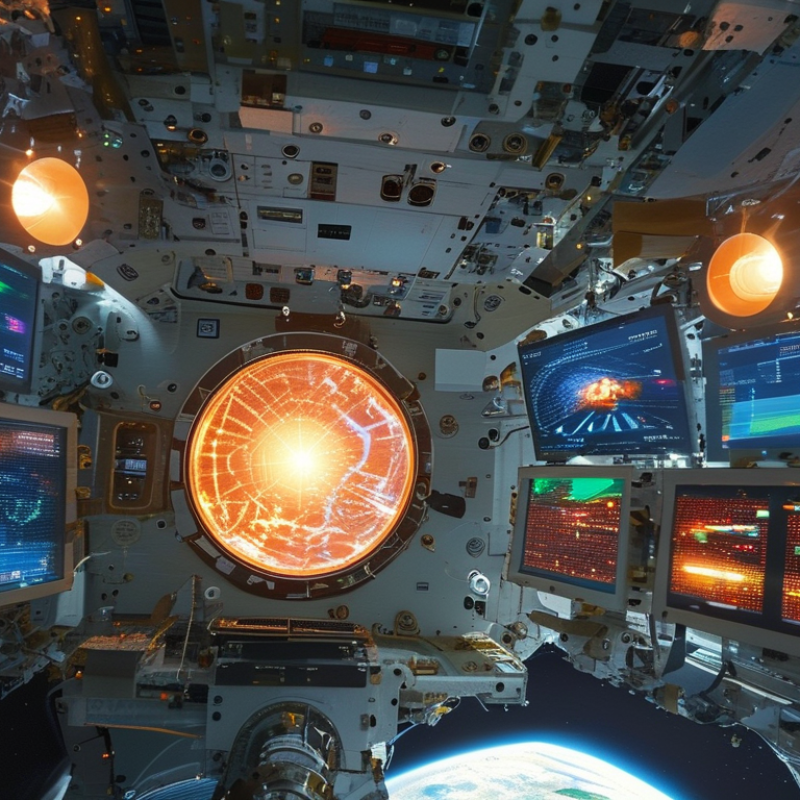
China’s space lighting industry produces many practical products for homes, offices, hotels, shops, and public interiors. LED downlights suit corridors, bathrooms, and compact rooms. LED panel lights create broad, even illumination in offices and classrooms. Linear lights fit long ceilings, counters, and workstations. They reduce dark gaps.
Track lights offer adjustable beams for galleries, retail displays, and changing layouts. Pendant lights add focused light above tables, reception desks, and kitchen islands. Wall lights support reading areas and create softer visual layers. Recessed spotlights provide cleaner ceilings, although installation requires accurate measurements. Some Chinese suppliers also produce high-bay fixtures for warehouses, emergency lighting, and smart-controlled systems.
Product selection should consider lumen output, color temperature, beam angle, glare control, and heat management. For humid areas, buyers need suitable protection ratings and corrosion-resistant materials. A reliable supplier should provide photometric data, electrical test reports, sample approval, and clear warranty terms. Factory experience matters, but documents alone are not enough. Inspect wiring, diffuser quality, driver stability, and surface finishing during sampling.
Customization is widely available. Housing colors, dimensions, sensors, dimming methods, and packaging can often be adjusted. However, customization may increase testing time and minimum order quantities. No lighting product is perfect. A brighter fixture can create glare, while a softer one may feel insufficient. Careful mock-ups and on-site testing remain necessary before production.
China Best Space Lighting Manufacturers and Suppliers
Key standards for space lighting design and manufacturing begin with safety, not appearance. A reliable supplier should design luminaires against IEC 60598 requirements for electrical and mechanical protection. IEC 62471 also helps assess blue-light and other photobiological risks. These checks matter in offices, hotels, hospitals, and public interiors.
Light quality needs measurable control. Ask for verified data on color temperature, color rendering, glare, flicker, and lumen maintenance. A 4000K fixture may feel suitable in a showroom but uncomfortable in a bedroom. UGR testing should reflect the actual ceiling, wall, and furniture conditions. Laboratory results alone can mislead.
Details matter.
Manufacturers should also review IEC 60529 ingress protection ratings and applicable electromagnetic compatibility requirements. Thermal tests should examine the housing, driver, and LED junction under continuous operation. Good production records include incoming material checks, aging tests, electrical testing, and batch traceability. ISO-based quality systems can support consistency, but certification does not replace practical inspection. I have seen technically attractive samples fail because connectors loosened after repeated heating cycles. That weakness deserves attention. Clear drawings, honest test reports, and controlled tolerances make supplier evaluation more dependable.
| No. | Design or Manufacturing Dimension | Applicable Standard or Reference | Key Requirement or Technical Consideration | Recommended Verification Method | Supplier Evaluation Evidence |
|---|---|---|---|---|---|
| 1 | Lighting Function and Mission Use | Mission-specific system requirements; NASA-STD-3001, Volume 2, where applicable | Define whether the luminaire is intended for crew work, general cabin illumination, emergency lighting, equipment status indication, or inspection tasks. Brightness, color, controls, and redundancy should be derived from the mission and human-factors requirements. | Requirements review, lighting layout analysis, human-factors assessment, and prototype evaluation. | Compliance matrix, interface-control documents, optical test reports, and configuration records. |
| 2 | Illuminance and Uniformity | ISO 8995-1 / CIE S 008 for indoor workplace lighting guidance | Use task-based illuminance targets rather than a single value for the whole spacecraft. Common indoor reference levels include approximately 100–300 lx for general areas and 300–500 lx for many reading or office tasks, subject to mission-specific approval. Avoid strong spatial gradients and glare. | Grid-based photometric measurements on representative surfaces; calculate average illuminance and uniformity ratio. | IES-format photometric files, integrating-sphere results, and calibrated lux-meter records. |
| 3 | Color Quality and Correlated Color Temperature | CIE colorimetry publications; ISO 8995-1 / CIE S 008 | Select CCT according to crew comfort, circadian-lighting strategy, imaging requirements, and operational tasks. A project may specify a tunable range, such as approximately 2700–6500 K, but the actual range must be established by the mission design authority. Specify color consistency and color-rendering performance. | Measure CCT, chromaticity coordinates, color rendering, and unit-to-unit variation using a calibrated spectroradiometer. | Spectral power distribution, chromaticity data, color-bin definition, and production sampling plan. |
| 4 | Flicker and Temporal Light Modulation | IEEE 1789-2015 guidance; mission human-factors requirements | The driver should minimize visible flicker and stroboscopic effects across the full dimming range, including low-output conditions and possible camera or sensor operating modes. Acceptance limits should be defined using the selected measurement method. | Oscilloscope or photodiode measurement of light output modulation at each commanded power level and operating frequency. | Flicker test plots, driver specifications, dimming test data, and control-interface records. |
| 5 | Photobiological and Optical Safety | IEC 62471, Photobiological safety of lamps and lamp systems | Evaluate blue-light, ultraviolet, infrared, retinal, and skin exposure risks for the complete luminaire, including optics and maximum output. Direct line-of-sight exposure and reflected-light conditions should be considered. | Radiometric and spectral measurements at specified viewing distances and exposure durations. | IEC 62471 assessment, spectral test report, optical shielding details, and user-exposure analysis. |
| 6 | Electrical Safety and Luminaire Construction | IEC 60598-1; applicable IEC 60598-2 product-part requirements | Address insulation, protective earthing or bonding, creepage and clearance, abnormal operation, accessible temperatures, wiring, connectors, mechanical retention, and enclosure construction. Spacecraft power architecture may require additional low-voltage and DC-specific controls. | Dielectric-strength, insulation-resistance, continuity, abnormal-operation, temperature-rise, and mechanical-inspection tests. | Safety test reports, schematics, material declarations, connector data, and controlled assembly drawings. |
| 7 | Thermal Management and Lifetime | Mission thermal requirements; LED and driver manufacturer qualification data | Control LED junction temperature, driver temperature, and enclosure hot spots. Report life using lumen-maintenance terminology such as L70 only when the test method, temperature, current, and extrapolation model are documented. Do not treat nominal LED life as a complete luminaire-life guarantee. | Thermal-vacuum or thermal-balance testing, temperature mapping, accelerated life testing, and output degradation measurement. | Thermal model, derating curve, life-test report, component ratings, and end-of-life performance limits. |
| 8 | Vacuum, Outgassing, and Materials | ASTM E595; ECSS-Q-ST-70-01 for space materials and processes, where applicable | Materials, adhesives, coatings, wire insulation, and encapsulants should be screened for low outgassing and compatibility with the spacecraft environment. Vent trapped volumes and avoid contamination-sensitive materials when required by the mission. | Material review, ASTM E595 testing, vacuum exposure, contamination inspection, and compatibility assessment. | Material list, certificates, ASTM E595 results, process specifications, and contamination-control plan. |
| 9 | Vibration, Shock, and Mechanical Integrity | ECSS-E-ST-10-03; IEC 60068-2-6 for sinusoidal vibration; IEC 60068-2-27 for shock, as applicable | The structure, lens, fasteners, circuit boards, connectors, and solder joints must withstand launch vibration and shock environments defined by the spacecraft. Prevent lens release, fastener loosening, and intermittent electrical faults. | Qualification or acceptance vibration and shock tests, resonance survey, visual inspection, and post-test functional testing. | Test configuration, fixture drawings, vibration response data, workmanship records, and post-test inspection report. |
| 10 | Thermal Cycling and Environmental Qualification | ECSS-E-ST-10-03; IEC 60068 environmental test methods, where applicable | Define operating, non-operating, storage, and survival temperature limits based on the spacecraft thermal design. Check optical output, dimming, driver start-up, seals, adhesives, and solder joints across the complete temperature range. | Thermal-vacuum cycling, thermal balance testing, functional cycling, and pre- and post-test photometric comparison. | Environmental qualification plan, temperature profiles, chamber records, functional data, and acceptance criteria. |
| 11 | Electromagnetic Compatibility and Power Quality | ECSS-E-ST-20-07; mission-level EMC and power-quality requirements | Control conducted and radiated emissions, susceptibility, switching transients, inrush current, harmonics, and interaction with spacecraft avionics, sensors, communications, and power converters. | EMC chamber testing, conducted-emission measurements, susceptibility testing, and power-transient analysis. | EMC test report, circuit diagrams, filter design, grounding scheme, and power-interface specification. |
| 12 | Reliability, Redundancy, and Maintainability | Mission reliability program; ECSS-Q-ST-30 and applicable project quality requirements | Define failure modes, allowable loss of light, independent channels, current limiting, fault containment, replacement strategy, and access constraints. Critical lighting may require multiple circuits or graceful degradation. | FMEA or FMECA, reliability prediction, life testing, fault-injection testing, and serviceability review. | Reliability report, parts-control records, derating analysis, FMEA/FMECA, and maintenance instructions. |
| 13 | Quality Assurance and Production Consistency | ISO 9001 quality-management principles; project-specific ECSS quality requirements | Maintain traceability for LEDs, drivers, optical materials, soldering, coating, calibration, inspection, nonconformities, and configuration changes. Define incoming inspection and final acceptance limits for every critical characteristic. | Process audits, first-article inspection, lot sampling, burn-in where justified, final functional testing, and document review. | Certificate of conformity, inspection plan, process-flow chart, calibration certificates, traceability records, and nonconformance-control procedure. |
Note: Values and standards shown are general engineering references. Final acceptance limits, test severities, illuminance levels, materials, and environmental profiles must be approved against the specific spacecraft mission, orbit, crewed or uncrewed application, and system-level requirements.
China Best Space Lighting Manufacturers and Suppliers
How to Evaluate Chinese Space Lighting Manufacturers
Evaluating Chinese space lighting manufacturers requires more than comparing catalog prices. Start by checking their production experience, engineering staff, and completed projects. Ask for photometric files, color temperature records, glare data, and test reports. These documents show whether the proposed fixture fits your actual space, not just a showroom photograph. Ask for evidence.
A reliable supplier should explain LED selection, driver quality, heat management, and expected lumen maintenance. Request samples with the same housing, diffuser, and control system used in mass production. Test them in a room similar to your project. Observe shadows, flicker, beam consistency, and surface temperature after several hours. Samples reveal habits. A polished sample may still hide weak assembly controls.
Factory communication also deserves careful review. Check whether the manufacturer uses incoming-material inspections, aging tests, batch records, and final electrical testing. Clarify tolerances, replacement procedures, packaging, and delivery responsibilities in writing. Export experience matters, but certificates alone do not prove dependable performance. Visit the factory when possible, or arrange an independent inspection. In practice, I have found that small documentation gaps can create larger installation delays. No supplier is flawless. A thoughtful buyer should record these gaps, question them, and decide whether the manufacturer responds with facts or convenient promises.
China’s space lighting suppliers are moving beyond simple LED assembly. Their strongest capability is systems engineering for harsh, tightly controlled environments. Space Foundation’s The Space Report 2024 valued the global space economy at about US$570 billion in 2023. This growth increases demand for qualified cabin, payload, launch-site, and ground-support lighting. The International Energy Agency estimates that lighting uses roughly 15% of global electricity. Efficiency matters in orbit, where every watt becomes heat. Small details matter.
Experienced Chinese suppliers now combine optical simulation, thermal design, EMC control, and vibration-resistant structures. Engineers can tune beam angles, color temperature, glare, and flicker for crew comfort. They also develop dimming logic, redundant drivers, and low-outgassing materials for enclosed spacecraft. During supplier audits, request thermal-vacuum, random-vibration, radiation, and life-test records. Ask for traceability, too. NASA-STD-3001 connects lighting with visibility, alertness, sleep, and human performance. This supports designs based on measured biological and operational needs, not appearance alone.
China’s advantage is flexible customization, supported by mature electronics and precision manufacturing networks. Shorter engineering feedback loops can reduce redesign during prototype stages. Yet capability is uneven. Documentation sometimes trails the hardware, and laboratory results may not represent full mission conditions. That is a problem. Buyers should compare test methods, uncertainty ranges, failure criteria, and production consistency. Reliable suppliers provide calibrated photometric data, material declarations, inspection records, and clear acceptance limits. Space lighting is small hardware with mission-level consequences.
Purchasing space lighting requires more than comparing prices and wattage. Start with the room’s purpose, ceiling height, working surfaces, and expected operating hours. Ask suppliers for photometric files, color consistency data, glare ratings, thermal test results, and certificates for applicable electrical standards. A reliable manufacturer should explain limitations clearly, not promise perfect performance.
Request production samples before placing a large order. Check the beam pattern on the actual ceiling, not only in a showroom. Examine housing joints, diffuser uniformity, wiring, dimming response, and heat around the driver after several hours.
Keep batch numbers and inspection records. These details support traceability when products arrive with small but costly differences. I have found that a low quotation can hide weaker drivers or incomplete testing. However, expensive products are not automatically safer. That assumption also needs review.
Tips:
Compare samples under identical conditions. Confirm lead times in writing.
Require replacement procedures for failed units. Ask whether spare drivers and lenses remain available.
Inspect random cartons before shipment, because one perfect sample proves little.
No checklist is perfect. Human inspection can still miss a loose terminal or a color shift. Therefore, combine factory audits, third-party testing, and documented acceptance criteria. Look for suppliers with stable quality systems, trained inspectors, and evidence from comparable commercial projects. Ask direct questions about failure rates, warranty exclusions, and installation support. Their answers often reveal more than polished brochures.
They should address electrical, mechanical, photobiological, ingress, and electromagnetic risks. Testing must cover real operating conditions. A certificate alone is not enough.
Request color temperature, color rendering, glare, flicker, lumen maintenance, and photometric files. These figures show how light may behave indoors. Ask for evidence.
Ceiling height, wall color, furniture, and diffuser shape affect glare and shadows. A 4000K fixture may suit a showroom but feel harsh in a bedroom. The room changes everything.
Review incoming-material checks, aging tests, electrical testing, and batch traceability. Inspect connectors after repeated heating cycles. Small parts can fail.
Run the sample for several hours in a similar project environment. Observe flicker, beam consistency, shadows, and surface temperature. Do not trust appearance alone.
Clarify tolerances, packaging, delivery duties, replacement procedures, and acceptance limits. Clear drawings reduce installation confusion. Vague promises cause delays.
Useful capabilities include optical simulation, thermal design, vibration resistance, and electromagnetic control. Some projects also require dimming logic, redundant drivers, and low-outgassing materials. Needs vary.
Compare test methods, uncertainty ranges, failure criteria, and production consistency. Request thermal-vacuum, vibration, radiation, and life-test records when relevant. I might trust polished data too quickly, so I would check the testing conditions.
China has become a major source of Space Lighting products, offering solutions for residential, commercial, hospitality, transportation, and public environments. Manufacturers typically produce ceiling lights, pendant fixtures, wall lights, recessed systems, track lighting, linear luminaires, outdoor fixtures, and customized illumination systems. Successful products are designed around safety, energy efficiency, light quality, durability, thermal management, and compatibility with smart control systems. Key standards may cover electrical safety, electromagnetic compatibility, ingress protection, photobiological safety, material performance, and quality management, depending on the target market and application.
When evaluating Chinese Space Lighting manufacturers, buyers should review production capacity, engineering expertise, testing facilities, certifications, customization services, sample quality, communication efficiency, and delivery reliability. Leading suppliers often provide optical design, structural development, prototype production, automated assembly, aging tests, and comprehensive quality inspections. Purchasing decisions should also consider material traceability, warranty terms, packaging, spare parts, installation guidance, minimum order quantities, and after-sales support. Clear technical specifications and inspection procedures can help ensure consistent performance, regulatory readiness, and long-term value.

Xiaosan Light