Engineered for the demands of Japan's premium stage installations and structural engineering standards.
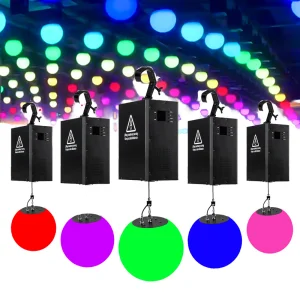
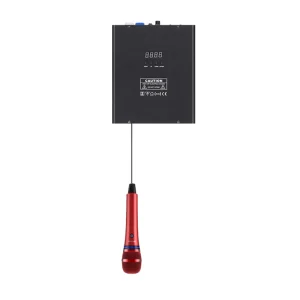
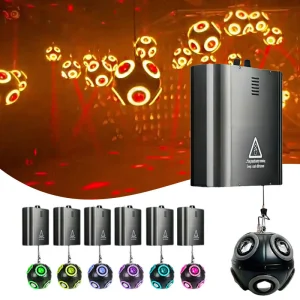
Osaka, traditionally the commercial engine of West Japan, is undergoing a profound cultural and structural transformation. As construction ramps up for major international exhibitions, theme park expansion, and the modernization of nightlife districts like Dotonbori and Shinsaibashi, the demand for high-end kinetic scenography has surged. Once a niche feature reserved for massive touring arena concerts, kinetic lights (motorized lighting fixtures driven by microsecond-precision winches) are becoming permanent architectural features in high-end shopping centers, corporate headquarters, and next-generation hospitality venues throughout Osaka.
This industry report outlines the technical requirements, global supply chains, and safety protocols necessary for developers, lighting designers, and procurement managers in Kansai. We examine how the integration of advanced motion mechanics with DMX/Art-Net control systems allows projects to achieve unmatched "information gain" via visually compelling spatial narratives.
Modern kinetics require stepper motors configured with absolute position encoders to prevent positional drift over millions of operational cycles. Our winches feature closed-loop motor control ensuring sub-millimeter landing accuracy.
Native integration with Art-Net, DMX512, and sACN protocols allows seamless control from standard lighting consoles or specialized media servers like Madrix, resolving sync lag between physical motion and color rendering.
Our units integrate electromagnetic brakes that lock in place upon loss of power, meeting the stringent Japanese safety codes (Architectural Standard Law of Japan) for suspended overhead equipment.


Founded in 2019 by Mrs. Ami Q and Mr. Ahren Z, Xiaosan has evolved from a specialized regional factory into an international supplier of high-end dynamic lighting. Headquartered in Guangdong, China, our manufacturing complex occupies a dedicated 1000 square meter facility optimized for mechanical assembly, control-board programming, and continuous load testing.
Our workforce of 30 skilled developers, engineers, and quality assurance personnel operates on a simple principle: bridging creative visions with robust, reliable hardware. We control every phase of production, enabling us to offer comprehensive one-stop services encompassing architectural planning, customization, 3D pre-visualization, and remote deployment support.
From initial design mockups to system commissioning, we provide full CAD layouts, Madrix patch files, and structural load calculations tailored for regional contractors in Osaka.
We guarantee all mechanical winch assemblies and light modules for three years, backed by replacement parts and 24/7 technical hotline availability.


As the event industry faces pressure to build increasingly immersive environments, lighting manufacturers are moving away from passive lighting bars to multi-axis mechanical arrays. We analyze the critical trends shaping the next decade of structural light design:
In massive installations containing hundreds of moving kinetic winches, the risk of cable tangling or mechanical failure is high. Next-generation systems incorporate software-based collision zoning and active real-time load cell monitoring. These systems automatically halt motor operation if tension limits are violated. S-curve acceleration algorithms ensure smooth starts and stops, reducing stress on cables and preventing swaying of the luminaire.
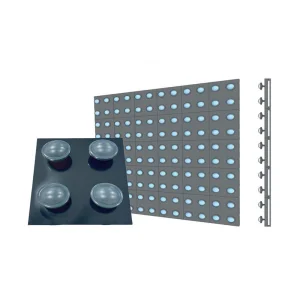
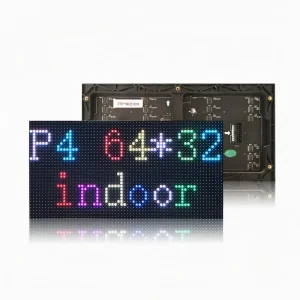
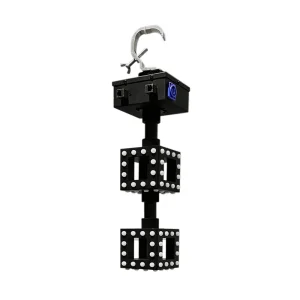
Legacy serial DMX512 networks face limitations when running high-resolution kinetic screens or 3D pixel grids. A single Rubik’s cube or pixel panel can consume multiple universes. We transition projects to high-speed Ethernet routing directly to the winch controller, decreasing controller latency to under 5 milliseconds and allowing perfect alignment with projection mapping and audio tracks.
With global focuses on decarbonization, large-scale systems in spaces like the Osaka Bay Area demand energy efficiency. Modern winches utilize energy-regenerative motor drives. As the light fixture drops under gravity, the motor acts as a generator, feeding trace power back into the system grid to reduce overall carbon footprints.
Procuring machinery for permanent architectural integration in Japan demands strict adherence to local laws. Standard consumer electronics compliance does not suffice for suspended commercial machinery.
Any electrical appliance operated within Japan must bear the PSE Mark (Circle or Diamond, depending on the category). Xiaosan works directly with licensed certification bodies to provide PSE-compliant winch internal power supplies and drivers, protecting your project from customs issues and legal liability.
Furthermore, local safety regulations mandate dual-suspension fail-safes (safety steel cables running parallel to high-tensile power cables) and dual-limit electronic switches. Our customization capabilities allow us to build winches that comply directly with the guidelines of Japanese municipal construction offices, ensuring your project clears inspections smoothly.
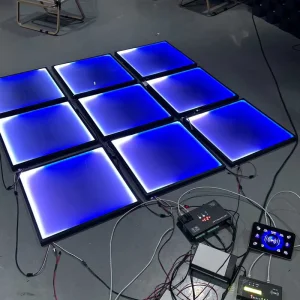
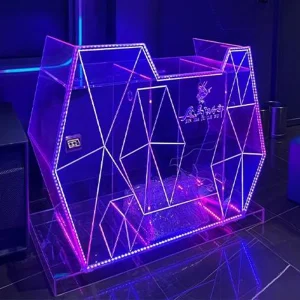
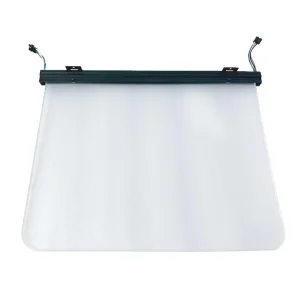
High-fidelity components configured for direct integration, providing scalable dynamic options.
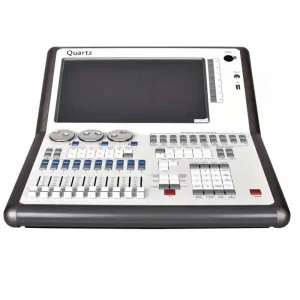
Critical engineering and purchasing answers for lighting designers and project planners.
Contact our senior lighting integration team today to receive a complete 3D project visualization quote and structural CAD compatibility blueprints.
Send Inquiry Now Xiaosan Light