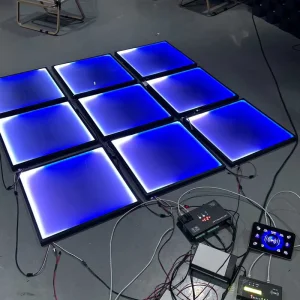
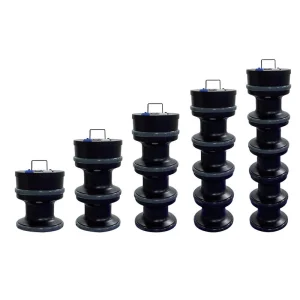
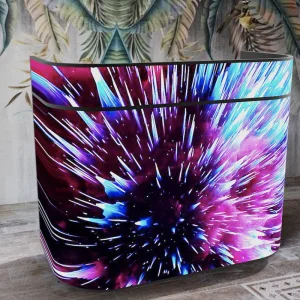
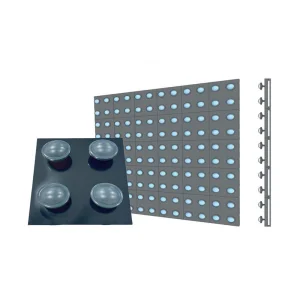
High-efficiency luminary units and control consoles engineered in compliance with global architectural safety standards.
Why elite global hospitality groups choose Mrs Ami Q and Mr. Ahren Z’s engineering layout.
We integrate full architectural R&D, physical structure design, installation directives, and fine-tuning. This minimizes multi-party vendor overheads and aligns final photometric outputs to engineering blueprints.
Every dynamic LED matrix and digital control console carries an unconditional three-year warranty. We run extreme load testing, structural pull tests, and high/low temperature cycle validation.
Xiaosan's localized support network spans over 30 countries and has resolved integration requirements for over 30,000 corporate clients, including Fortune Global 500 enterprises.
In modern commercial design, lighting has shifted from simple illumination to an active architectural and branding medium. Whether for high-end lounges, mega-clubs, or immersive hospitality venues, the implementation of dynamic lighting systems defines consumer stay-time, visual prestige, and spatial functionality.
This whitepaper covers the core aspects of sourcing professional entertainment lighting systems directly from China's primary manufacturing hubs, with a focus on technical viability, supply chain logistics, and integration protocols.
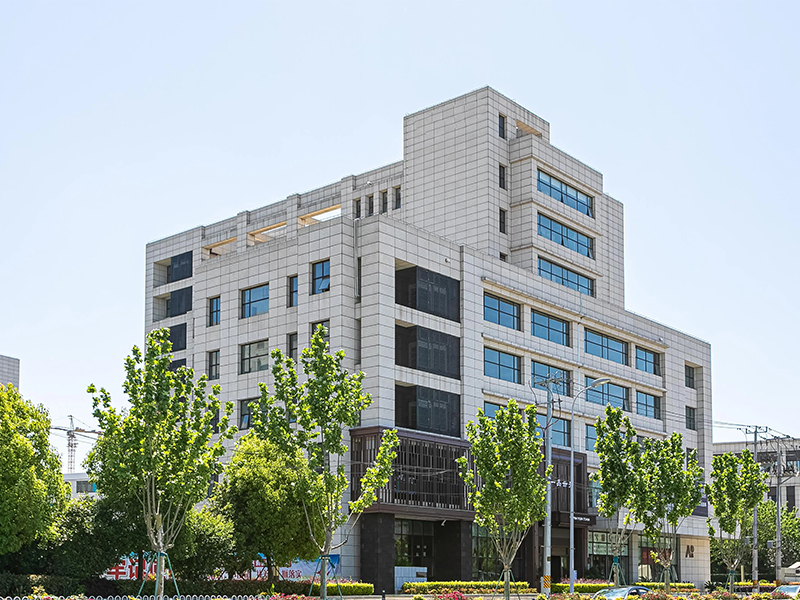
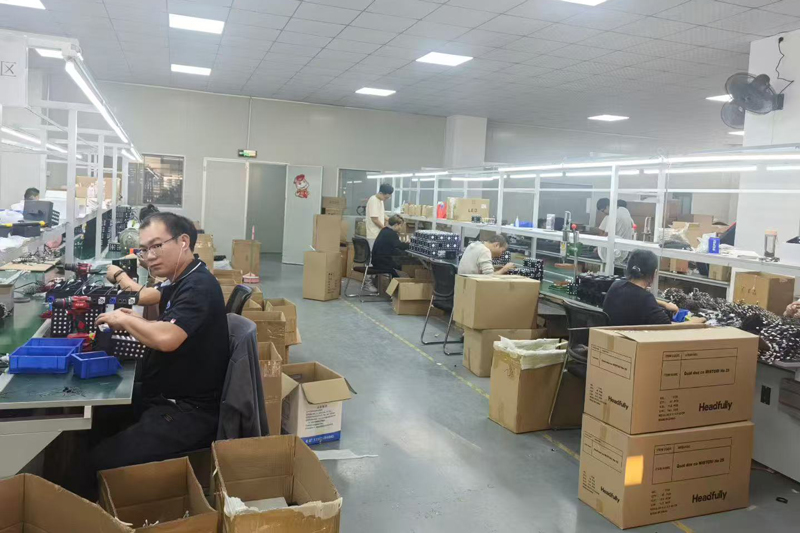
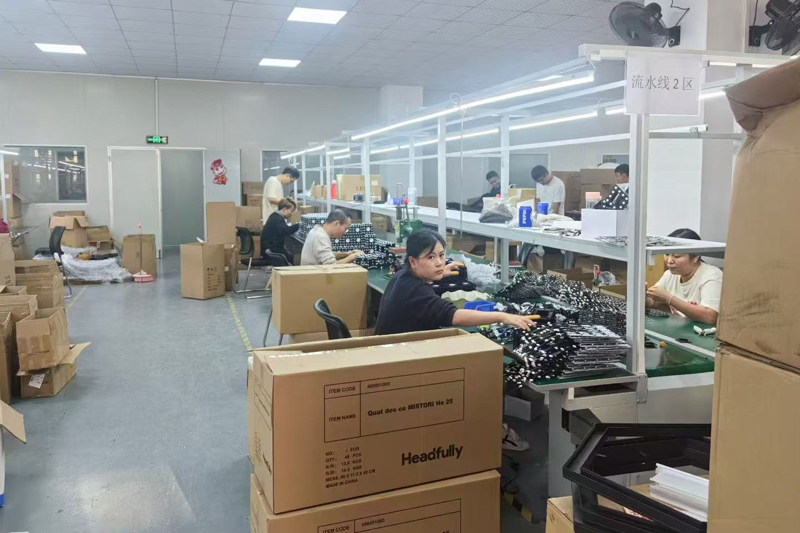
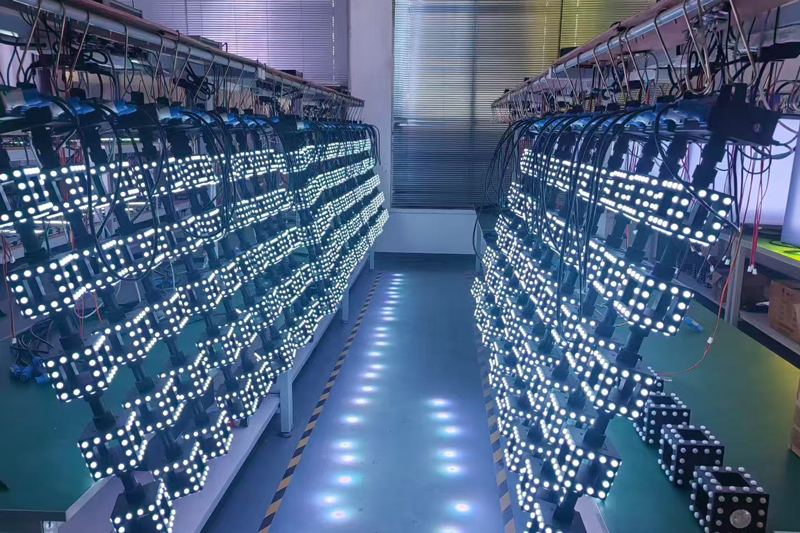
Founded in 2019 in Guangdong, China, by industry experts Mrs Ami Q and Mr. Ahren Z, Xiaosan maintains a dedicated 1,000-square-meter facility. The plant houses specialized surface-mount technology (SMT) lines and assembly bays, supported by a 30-person engineering team specializing in heavy-load kinetic installations and DMX systems.
A key challenge in commercial lighting procurement is protocol compatibility. B2B projects require seamless communication between fixtures, controllers, and external media systems. Sourcing light fixtures requires analyzing controller compatibility:
Procuring lighting fixtures for commercial venues demands strict adherence to international building and safety codes. When evaluating OEM factories, quality assurance checklists must prioritize:
Guangdong's lighting manufacturing sector has moved beyond simple assembly to smart production. Advanced production facilities offer clear benefits for global supply chains:
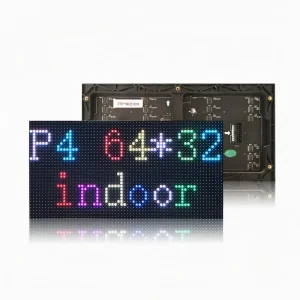
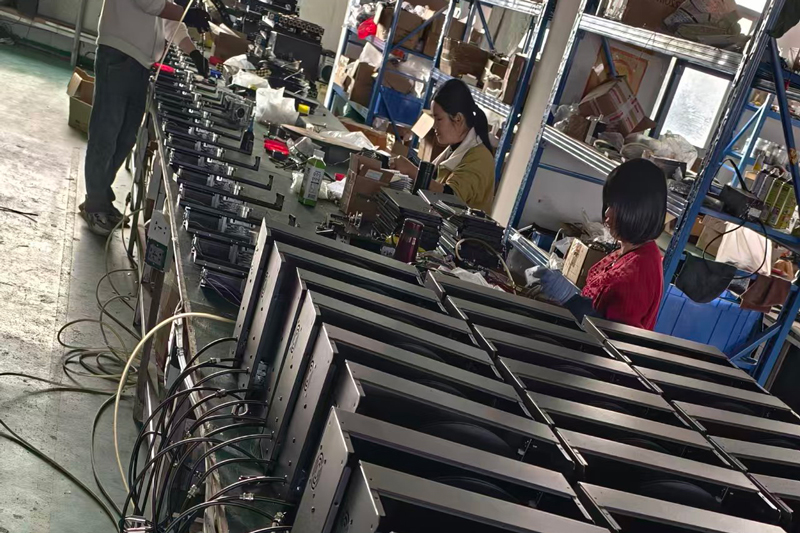
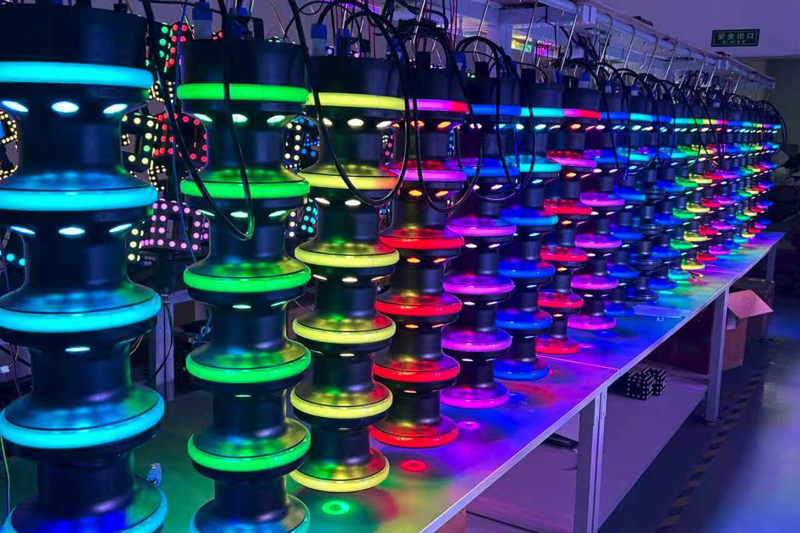
By using automated SMD (Surface Mount Device) machinery, precision CNC milling for custom brackets, and automated optical inspection (AOI), factories can maintain tight manufacturing tolerances. For example, Xiaosan's focus on structured production steps ensures consistent color temperatures (SDCM < 3) across large orders, eliminating visual inconsistencies in large LED panel installations.
Different commercial venues require tailored lighting layouts to achieve the desired effect:
Factory Size: 1000 sqm dedicated facility.
Location: Guangdong, China.
Workforce: 30 expert technicians and R&D engineers.
Compliance: Strict internal QA protocols with full traceability.
Warranty: Industry-leading 3-year warranty on all structural elements.
Need custom physical dimensions, pixel pitches, or tailored DMX protocols? Our engineering team works directly from CAD drawings and design layouts to build custom components that meet local regulatory codes.
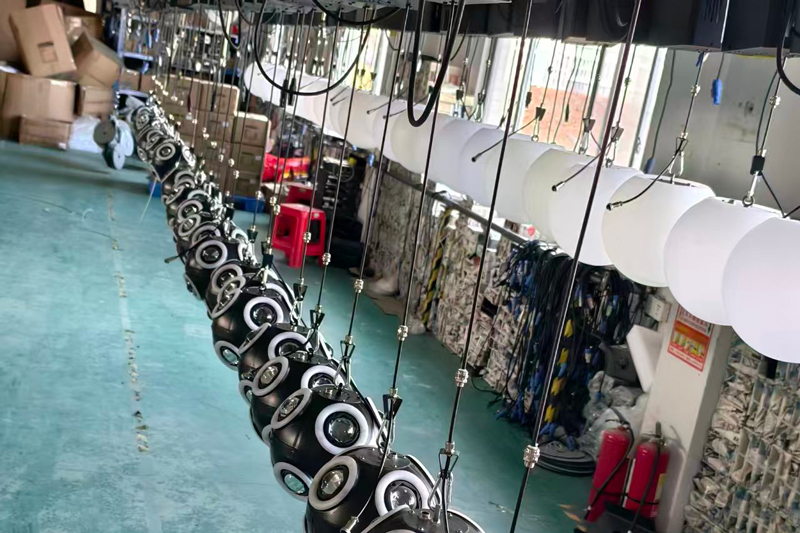
A visual tour of our manufacturing facility in Guangdong, highlighting our R&D bays and quality control testing areas.
Key answers to technical, commercial, and shipping queries for international buyers and lighting design teams.
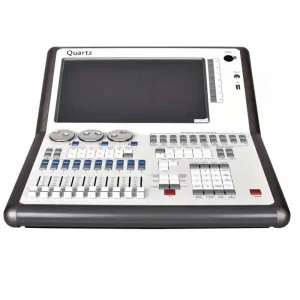
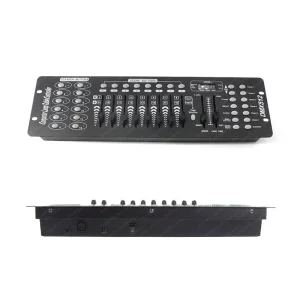
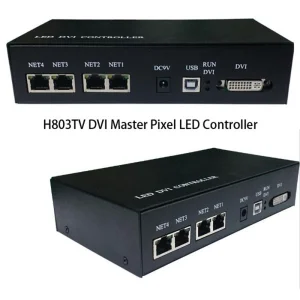
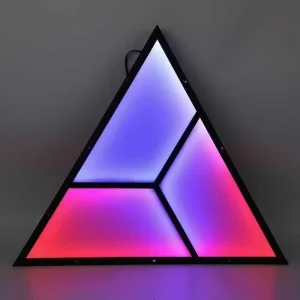
Traditional DMX512 consoles (like the Quartz Tiger) are designed to trigger programmed light cues, chase patterns, and moving heads. Madrix master controllers (such as the H803TV) function as real-time pixel-mapping devices. They convert video inputs (HDMI/DVI) directly into pixel values, which is necessary for displaying complex 3D graphics on matrix screens, tubes, and geometric LED panels.
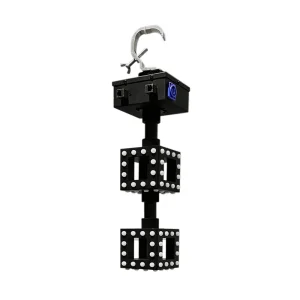
All kinetic lifting fixtures undergo rigorous load testing (up to 300% of maximum payload limits). Our winches are built with electromagnetic braking systems, physical limit switches, and anti-drop safety cables. These components meet the safety requirements needed for installations in public spaces, commercial clubs, and theaters.
Because we operate as a direct factory, our minimum order quantities are flexible depending on the custom engineering requirements of the project. Standard orders typically ship within 10 to 15 working days. Large-scale custom runs, which require tooling adjustments or bespoke CAD design, generally have a lead time of 25 to 30 working days from the approval of the technical drawings.
Yes. By utilizing Ethernet converters and standard IP communication protocols, our control systems interface with standard architectural automation networks, including Crestron, AMX, and Lutron. This allows central management of both functional architectural lighting and active entertainment systems from a single control point.
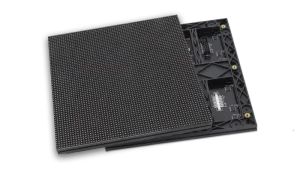
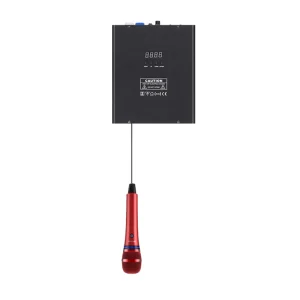
Additional LED panels, display systems, and controllers to complete your venue design.
 Xiaosan Light