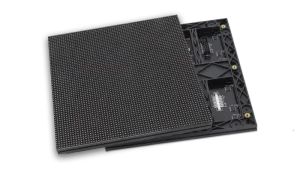
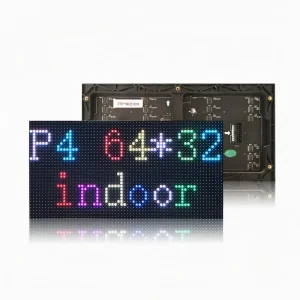
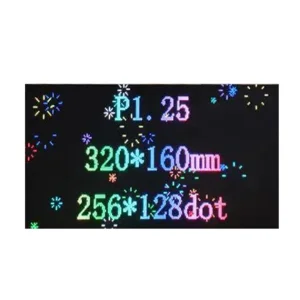
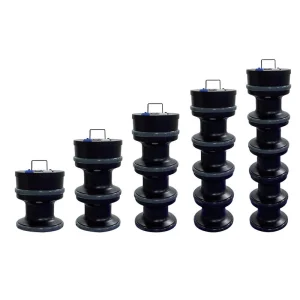
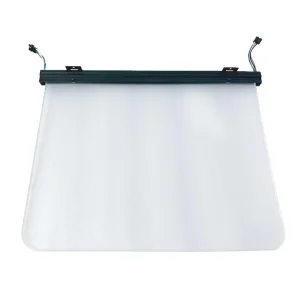
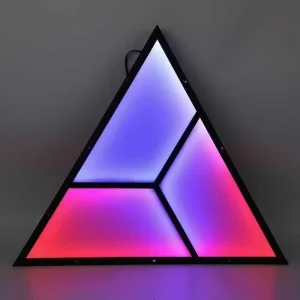
Direct-factory indoor components customized for deployment in Brussels, Antwerp, Ghent, and European commercial installations.
The Belgian market for visual technology has seen a profound shift towards high-fidelity, semantic, and highly communicative digital environments. In key cities like Brussels, the administrative heart of the European Union, the demand is driven by corporate briefing rooms, public sector assembly spaces, and international conferences where visual clarity, non-flicker performance under television cameras, and regulatory compliance are non-negotiable. Meanwhile, in creative and trade centers like Antwerp and Ghent, architectural projects, luxury retail galleries, and prominent entertainment venues require avant-garde visual tools to construct immersive brand journeys.
Modern commercial buildings in Belgium operate under some of the world's most stringent energy conservation mandates. As energy codes transition, passive cooling, optimized drive circuitries, and thermal dissipation systems inside indoor LED panels are heavily scrutinized. Procurement officers are no longer looking simply at cost-per-square-meter; instead, they focus on long-term operational costs, electromagnetic radiation footprints (CE EMCD directives), and post-installation service guarantees. This requires a strong connection with a manufacturing source capable of customizing internal chip designs and PCB layers to operate reliably under variable voltage environments.
To maximize your return on investment, selecting the correct pixel pitch is critical. A common mistake is buying high-density modules (like P1.25) when the viewing audience is situated 10 meters away, resulting in unnecessary capital expenditure. Conversely, selecting a low-density module for close-quarters viewing creates a distracting pixelated screen effect. The industry standard viewing metric is determined by the formula:
Furthermore, drive IC components play a major role. Cheaper indoor modules often utilize low-frequency PWM drivers that produce visible banding on smartphone cameras (frequencies below 1920Hz). Our factory integrates state-of-the-art Macroblock driver ICs, ensuring high-refresh rates of ≥3840Hz and maintaining consistent grayscale levels even at low brightness settings. This prevents visual fatigue in workplace environments and delivers crystal-clear images for broadcasted events.
How Xiaosan bridges the gap between state-of-the-art Chinese manufacturing and local European compliance demands.
All LED modules undergo comprehensive certification cycles covering low voltage directives (LVD) and electromagnetic compatibility (EMC), guaranteeing easy approval for commercial installations across Belgium.
We configure specific PCB layouts, high-performance driver chips, and custom structural frameworks to meet the precise architectural specifications of Belgian design agencies.
Underpinned by our robust post-sale commitment, we dispatch reserve components, modules, and control cards directly to your Belgian address, minimizing downtime.
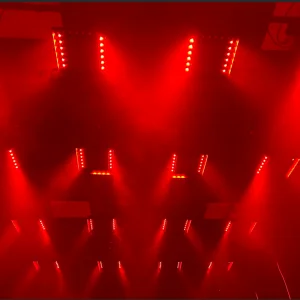
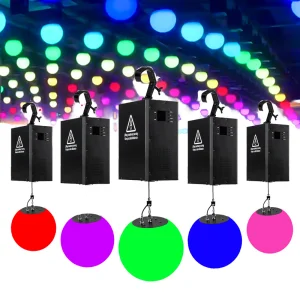
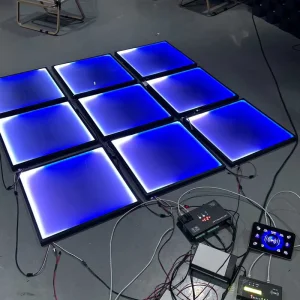
Directly connect dynamic lighting systems and staging systems with LED walls to construct cohesive club environments.
Guangdong Province stands as the epicenter of global optoelectronic manufacturing. This clustering effect allows us to sourcing top-grade raw components—including high-purity gold wire bonding, thick copper double-sided PCBs, and premium epoxies—at highly competitive rates. By operating our specialized production facilities, we maintain direct control over component selection and design, ensuring premium output for commercial integrations in Europe.
Our quality assurance protocol includes a strict 72-hour continuous burn-in procedure. Each module is placed in thermal chambers to simulate extreme environments, preventing early component failure in the field. When shipping to Belgium, we offer door-to-door logistics solutions, handling customs clearance at the Port of Antwerp or Brussels Airport to ensure a seamless import experience for your team.
Belgian nightlife is world-famous. In cities like Liege, Brussels, and Antwerp, clubs and live music venues are upgrading their lighting set-ups to stay competitive. The modern standard is a unified environment where LED screens, kinetic mechanical elements, and lighting consoles communicate on a single network protocol.
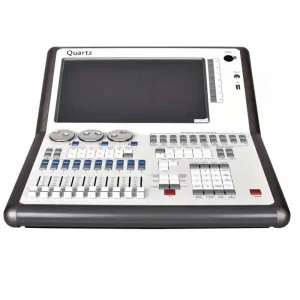
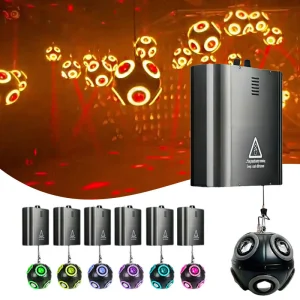
Through combining DMX 512 consoles, Art-Net nodes, and kinetic winch systems, lighting designers can sync moving LED modules with heavy beats. This modular integration gives venues the freedom to design custom spatial experiences, keeping crowds engaged night after night.
Xiaosan was founded in 2019 by Mrs. Ami Q and her husband, Mr. Ahren Z, in Guangdong Province. We are a professional factory specializing in LED lighting solutions for nightclubs, discos, and high-end entertainment venues. Our catalog includes lifting spherical lights, kinetic winches, LED screen modules, dance floors, and specialized DMX control suites.
Our 1,000 square meter factory is equipped with advanced assembly and quality assurance machinery. Guided by our R&D and production engineering teams, we ensure every batch meets international safety and environmental regulations. Driven by our core values of "innovation, quality, and service," we continue to deliver robust products to partners in over 30 countries.
A look at our factory showing our modern production lines, precision component assembly, and multi-stage testing setups.
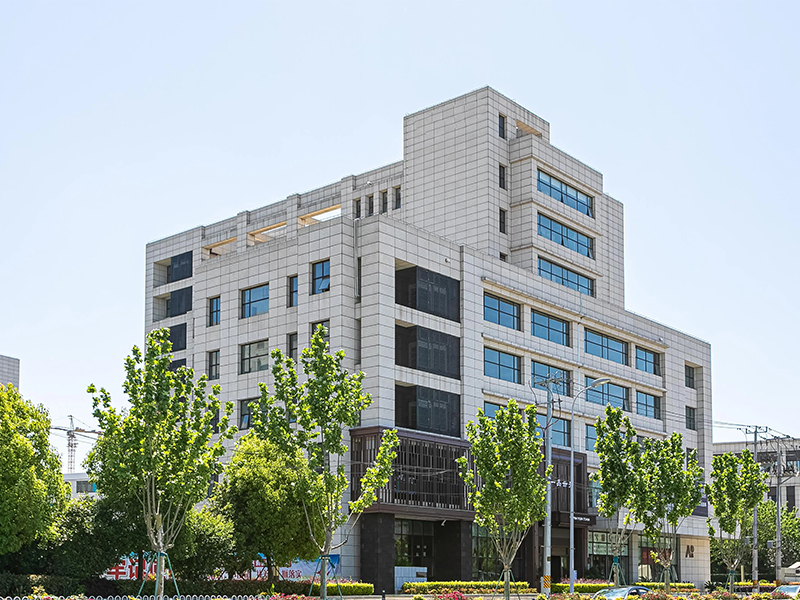
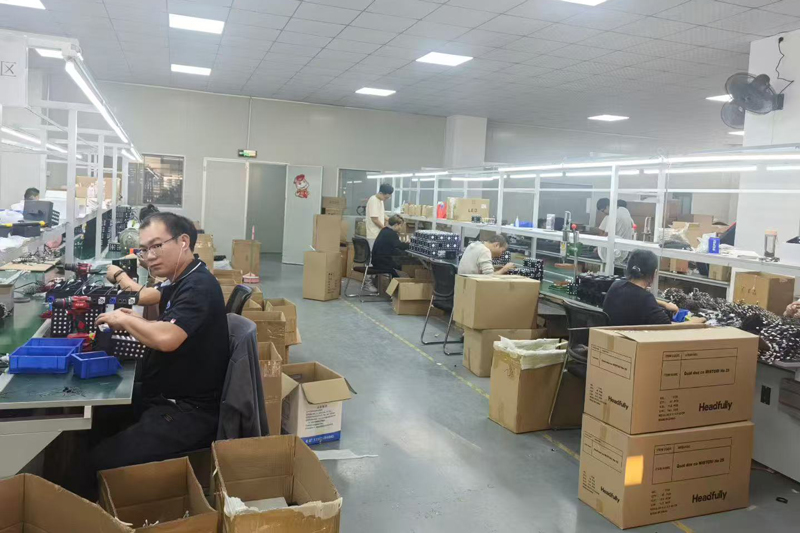
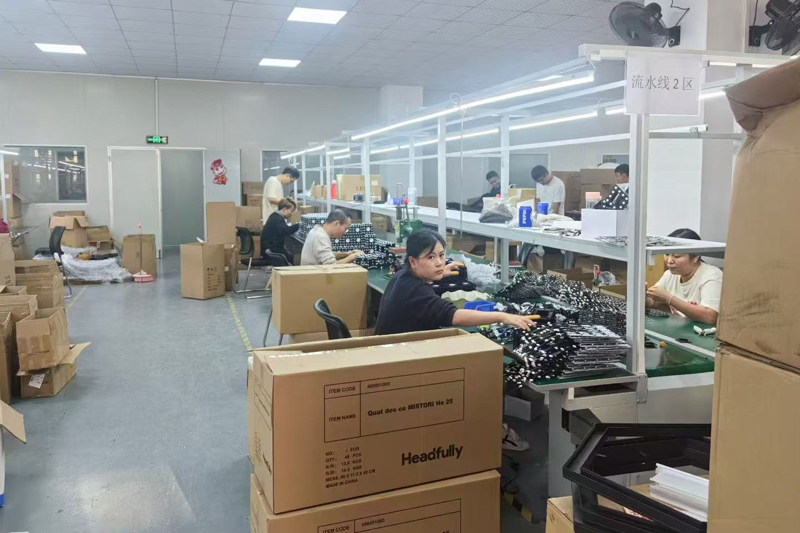
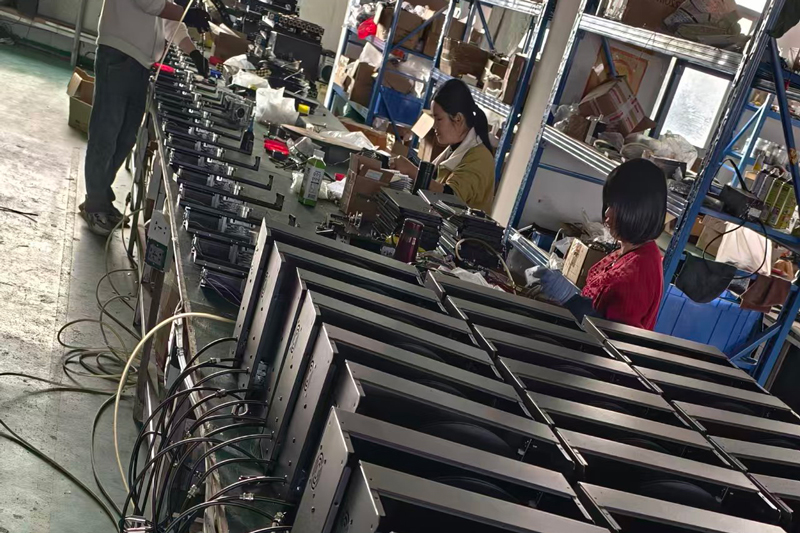
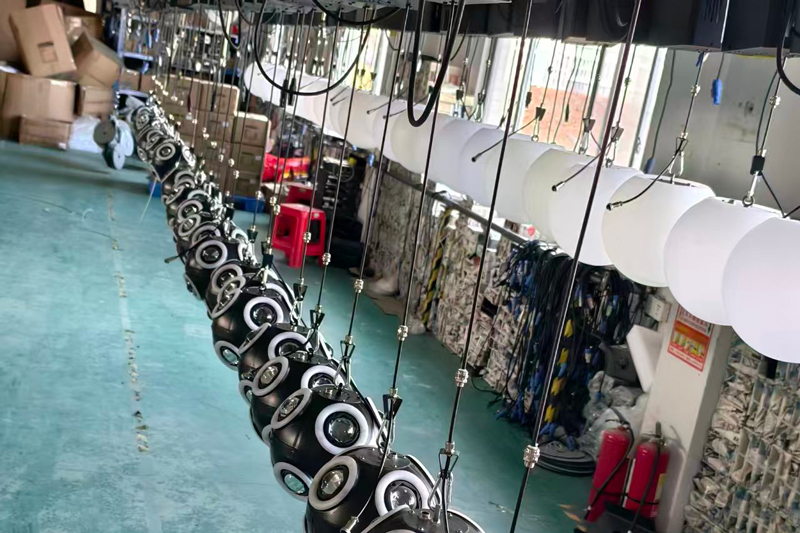
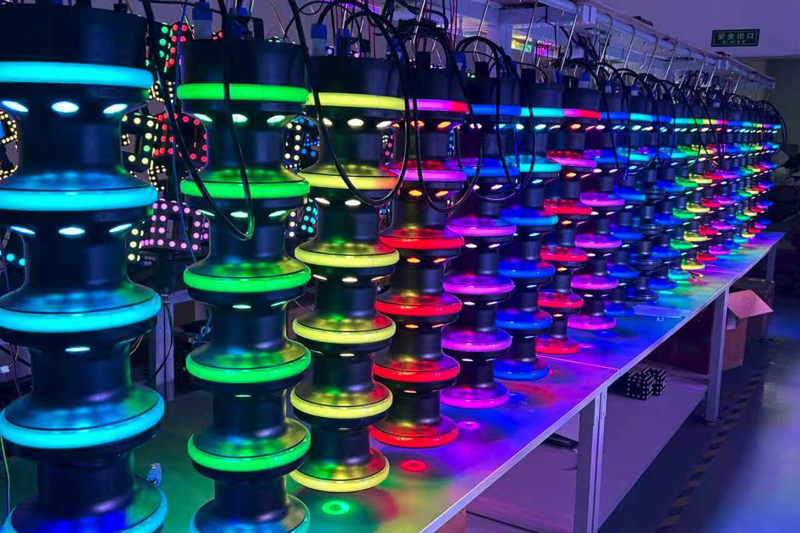
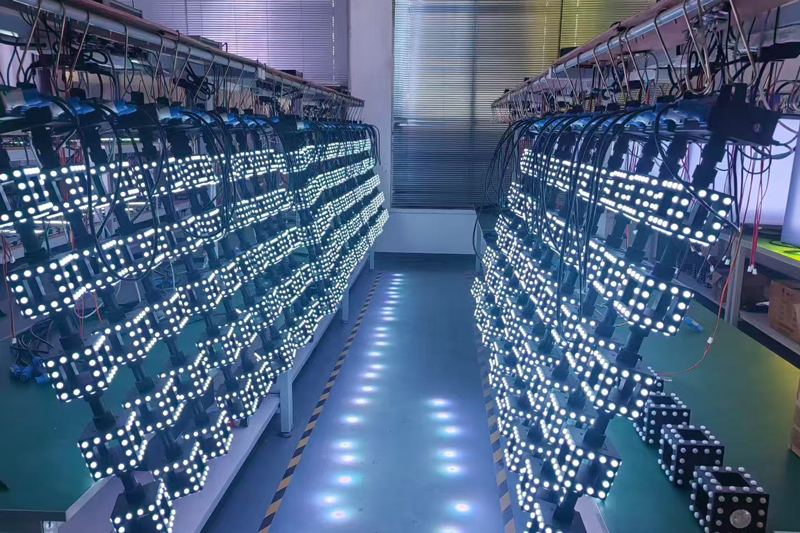
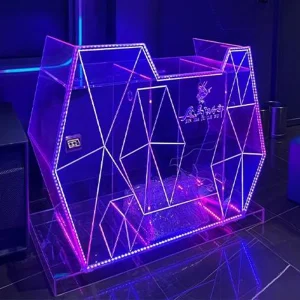
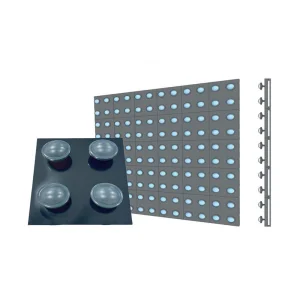
Explore our complete collection of stage lights, splicing LED panels, dynamic controllers, and acrylic display components.
Technical insights and import guidance for Belgian system integrators and procurement teams.
LED display panels are generally classified under TARIC code 8528590090. In Belgium, customs duties can vary based on features like integrated tuners. Most digital signage panels carry a 0% to 14% customs duty rate, in addition to Belgium's standard 21% VAT (except for registered corporate entities using the reverse-charge mechanism). We handle the necessary compliance and commercial invoicing to ensure smooth customs processing at Antwerp ports.
The pixel pitch (distance between LED centers) determines the minimum comfortable viewing distance. For example, a P1.25 module is perfect for close-quarters viewing in control rooms or boardrooms (approx. 4 meters), while P3 or P4 modules are better suited for retail storefronts or public spaces where viewers are situated further away. Selecting the right pitch helps optimize both visual quality and project budget.
We provide a standard 3-year factory warranty on all LED modules, kinetic winches, and power supplies. If a component experiences a technical issue, we dispatch replacement parts, modules, or receive the component at our factory for testing and repair, ensuring minimal downtime for your installations.
Our products are engineered to comply with the European Electromagnetic Compatibility Directive (2014/30/EU) and the Low Voltage Directive (2014/35/EU). We utilize certified power supplies (such as Mean Well) and design low-emission circuit boards to ensure our systems meet strict European standards.
Our kinetic stage lights and LED panels support standard protocols including DMX 512, Art-Net, and sACN. They are fully compatible with industry-standard control software like Madrix, Resolume, and Avolites Quartz Tiger consoles, allowing for easy integration into existing event production environments.
Manufacturing typically takes 10 to 15 working days depending on order size. Shipping via air freight (to Brussels Airport) takes 5 to 8 days, while sea freight (to the Port of Antwerp) takes approximately 30 to 35 days. We provide tracking information and handle custom packaging to ensure safe delivery.
 Xiaosan Light